On the surface, the water looks calm.
That is what makes Shark Week so addictive. The danger is not always splashing around with a warning sign.
It is underneath.
Already moving.
Cybercriminals work the same way.
The threats facing accounting firms are designed to blend in with normal business. They do not always kick down the front door. They slip into an inbox, imitate a vendor, borrow a trusted name, or use an old software connection nobody remembered was still active.
By the time something looks wrong, money may already be gone, client data may already be exposed, or systems may already be locked up.
And summer makes it worse.
People travel. Partners are away. Staff cover for each other. Approvals get rerouted. Oversight gets thinner.
Cybercriminals know that.
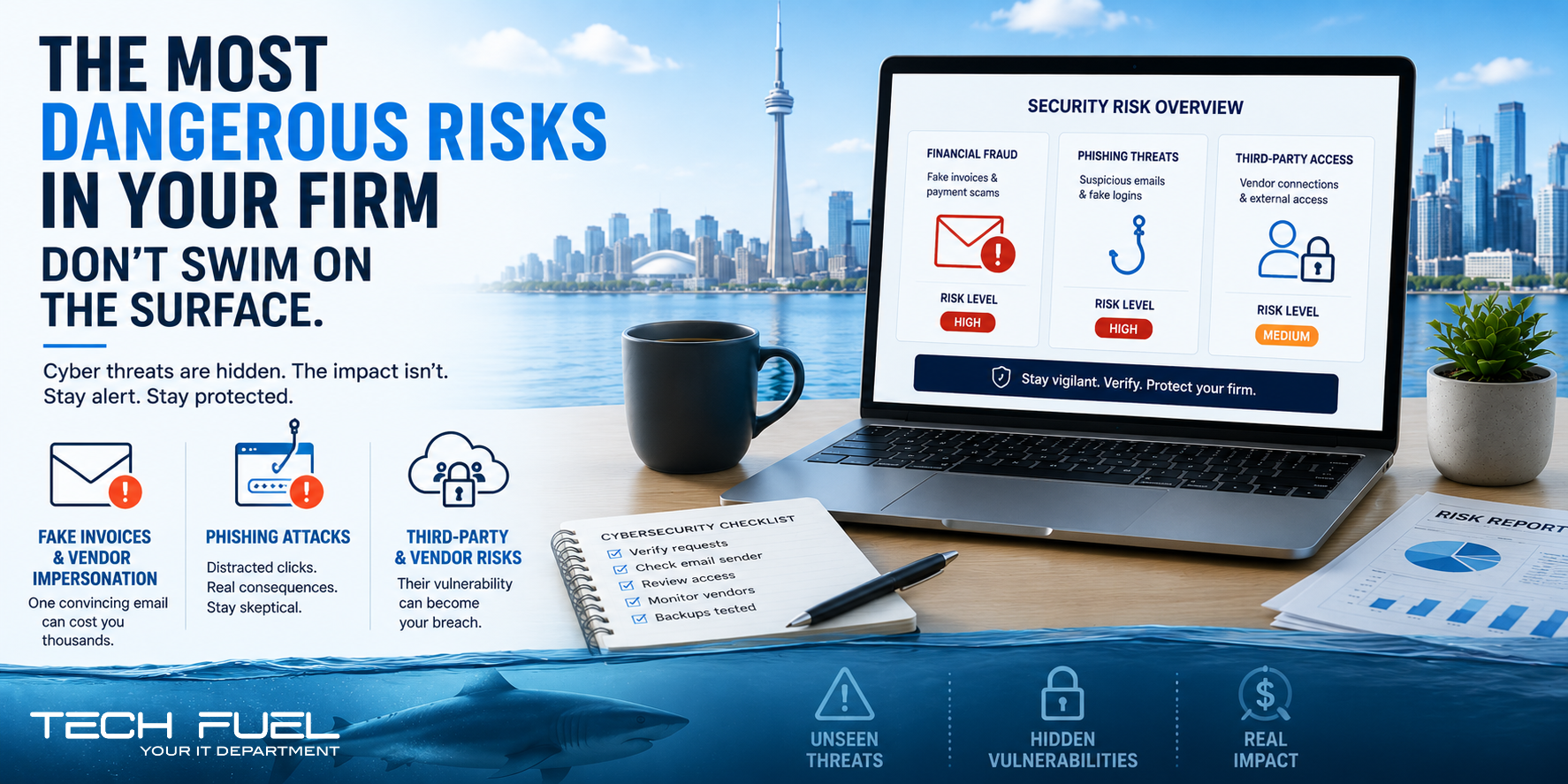
Here are three ways they are circling right now.
- Fake Invoices And Vendor Impersonation
Attackers do not always need to hack your systems.
Sometimes they just need to send one believable email.
An email arrives that looks like it came from a vendor, supplier, client, partner, or senior person in your firm. The tone feels normal. The request seems reasonable. Maybe banking details have changed. Maybe a payment needs to be processed quickly. Maybe the message references a real project or invoice.
Someone pays it.
Then the real vendor calls two weeks later asking where their money is.
Lovely.
For accounting firms, this is especially risky because your team is already trained to handle financial requests, documents, deadlines, and sensitive client communication.
Summer adds more danger.
The person who normally approves payments is at the cottage. A manager is travelling. Someone is covering an inbox they do not usually manage. The request feels urgent, and nobody wants to slow things down.
That is exactly what attackers are counting on.
The fix is simple: create a hard verification rule for any financial request received by email.
Changed banking details? Call a known number.
Urgent payment? Confirm through a second channel.
Unexpected invoice? Pause and validate.
One phone call can prevent a very expensive mistake.
- Phishing Attacks That Target Distracted Employees
Phishing works because people are busy.
Not because they are foolish.
Modern phishing emails are clean, convincing, and timed to catch people when their guard is down.
A staff member gets a Microsoft 365 login prompt while rushing between client calls. Someone receives a “shared document” notice that looks like it came from a colleague. A text claims to be from IT. An email lands right before a meeting asking for urgent approval.
Nobody stops, because stopping feels inefficient.
That is the trap.
Attackers use speed against you.
Accounting firms run on deadlines, client requests, and constant context switching. People are more likely to click when they are rushed, tired, or covering for someone else.
Yes, you need filtering, MFA, endpoint protection, and monitoring.
But the real protection is culture.
Your team needs permission to slow down and question unexpected login prompts, links, payment requests, or anything that bypasses normal process.
In cybersecurity, “I just wanted to double-check” may be the most profitable sentence anyone says all week.
- Third-Party Risks That Travel Fast
Most firms do not realize how many outside companies have access to their systems.
Software vendors. Cloud platforms. Payroll tools. Tax software. Bookkeeping apps. Former consultants. Contractors. Old integrations.
The risk is simple: when a third party with access to your environment is compromised, the problem may travel through that connection into your firm.
That is supply chain exposure.
For accounting practices, it matters because your ecosystem is full of sensitive data and connected tools: Microsoft 365, SharePoint, QuickBooks, Xero, CaseWare, client portals, e-signature platforms, workflow tools, and more.
Outsourcing a service does not outsource accountability.
Ask:
Which vendors can access our systems or data?
What are they connected to?
Who inside the firm owns each relationship?
If the answers are fuzzy, you have exposure.
You do not need paranoia.
You need a map.
Calm Water Can Be Misleading.
The firms that get hit are not always ignoring obvious warning signs.
Often, they assume everything is fine because nothing looks wrong.
Email works. Files open. Vendors are connected. Staff are busy.
Everything seems normal.
Until it is not.
At Tech Fuel, we help accounting firms see what is moving beneath the surface: vendor access, employee risk, email security, old permissions, cloud tools, and everyday gaps criminals love.
Call us at 1-855-737-8277, book a quick Discovery Call, or view our I.T. Buyers Guide.